Best first path
Use one structure for source, medium, campaign, and content so your team can read it later without guessing.
Naming guide
Copy a clear naming system for utm_source, utm_medium, utm_campaign, and utm_content, then use the same rules across Meta, Google Ads, TikTok, email, and affiliate links.
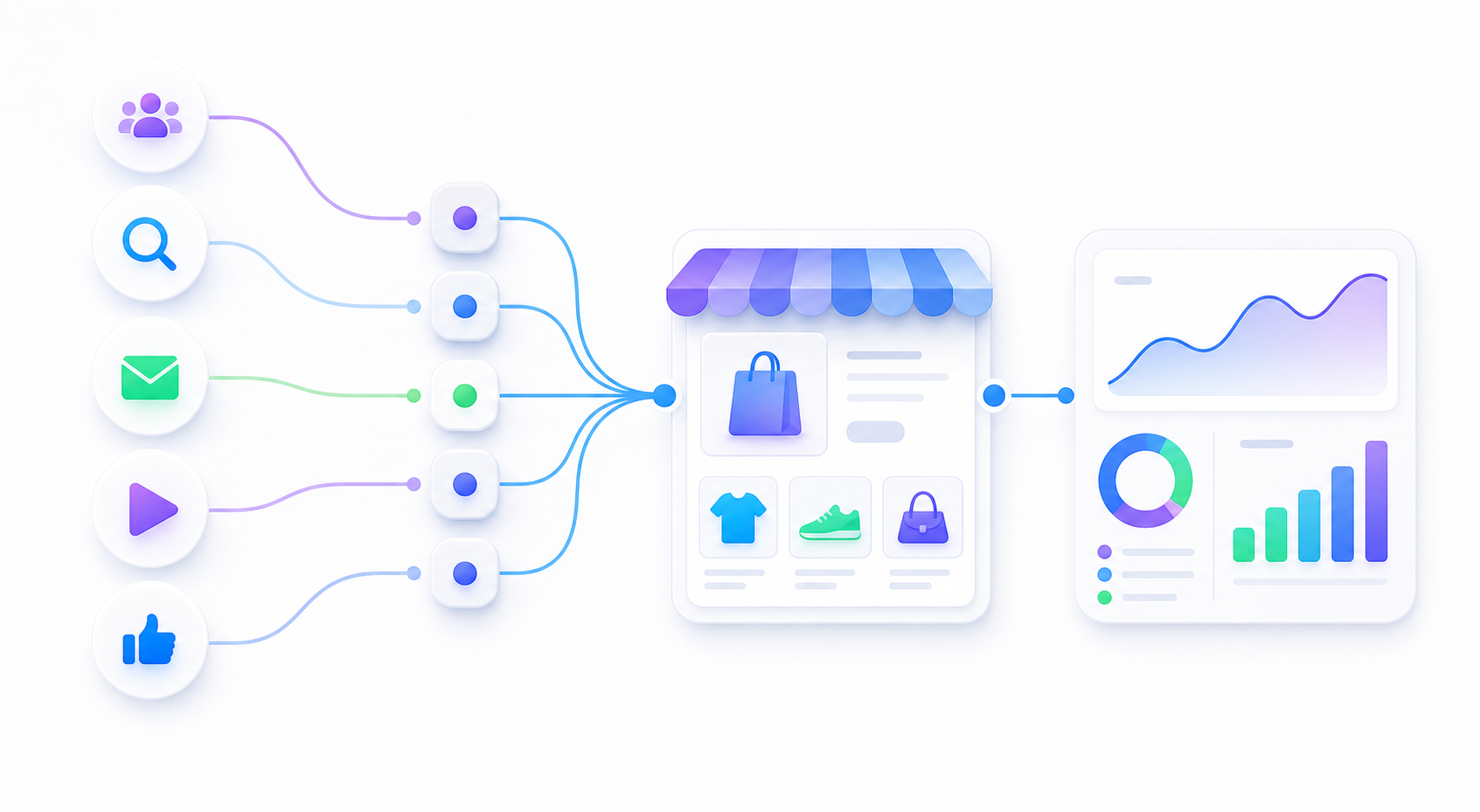
Use one structure for source, medium, campaign, and content so your team can read it later without guessing.
Campaign names drift when every platform or person invents its own separator, order, or word style.
The same naming pattern works across Meta, Google, TikTok, AppLovin, email, and affiliate traffic.
Use this field order as a baseline for ecommerce campaigns:
utm_source short and stable, such as meta or google.utm_medium by traffic type, such as paid_social or paid_search.utm_campaign in one fixed order so reports sort predictably.utm_content for creative comparison, not customer or order details.Open the free CSV-to-UTM tool when your approved naming values are ready to turn into campaign links.
| Parameter | Use it for | Recommended pattern | Example |
|---|---|---|---|
utm_source |
Platform or referrer | Stable lowercase platform name | meta |
utm_medium |
Traffic category | One controlled channel value | paid_social |
utm_campaign |
Campaign grouping | market_objective_offer_period | us_conversion_summer_sale_2026q3 |
utm_content |
Creative variation | format_concept_version | video_ugc_v1 |
utm_term |
Keyword or optional targeting detail | Use only when the report needs it | running_shoes |
Example final URL:
| Channel | Example | Why it works |
|---|---|---|
| Meta | meta / paid_social / us / launch / spring_sale / hero_video |
Readable and easy to scan in GA4. |
google / paid_search / us / launch / running_shoes / headline_a |
Works for search and YouTube-style naming. | |
| TikTok | tiktok / paid_social / us / launch / ugc_test / hook_1 |
Useful for creator or ad iteration. |
| Affiliate | affiliate_partner / affiliate / us / partner / q2_push / placement_a |
Lets you compare partner performance later. |
A UTM naming convention is a shared rule for source, medium, campaign, content, and term values so campaign links stay readable and comparable across channels.
A simple ecommerce template is source, medium, market, objective, campaign, and creative. Keep separators consistent and avoid private customer data.
Use underscores or hyphens consistently instead of spaces. The most important rule is to pick one format and keep it stable across every campaign and traffic channel.
Lowercase values are easier to keep consistent because analytics tools can treat Meta, meta, and META as separate values. Choose lowercase unless an existing reporting system requires another format.
Use a stable order such as market, objective, offer, and period. For example, us_conversion_summer_sale_2026q3 stays readable without putting customer or order data in the URL.
Store the approved values and examples in one shared sheet or CSV. Give each field an owner and update the template before launching a new channel or naming pattern.
Keep one approved naming sheet and use it before links reach ads, affiliates, email, or GA4.